
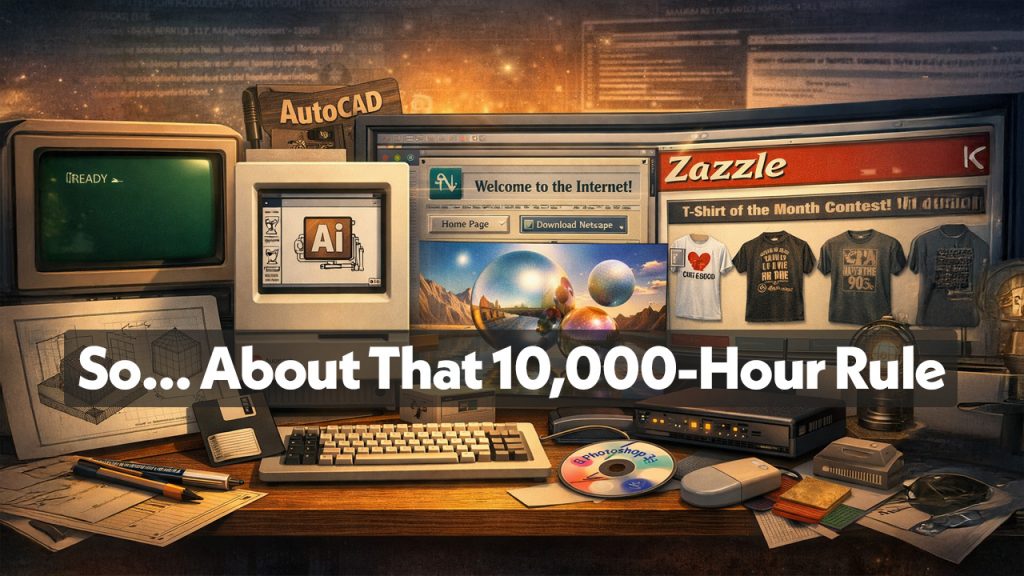
So… About That 10,000-Hour Rule
Every now and then, it feels good to slow down and look back, not to measure success, but to remember how far the road actually stretches behind you. I was recently talking with a friend and mentioned I’ve been around the block a few times. Which is my standard response to knowing what I know. That friend mentioned the 10,000-hour rule from Outliers: The Story of Success, it opened a door I had not stepped through in a while. Not a victory lap. More like wandering through an old neighborhood and realizing you still remember where everything used to be.
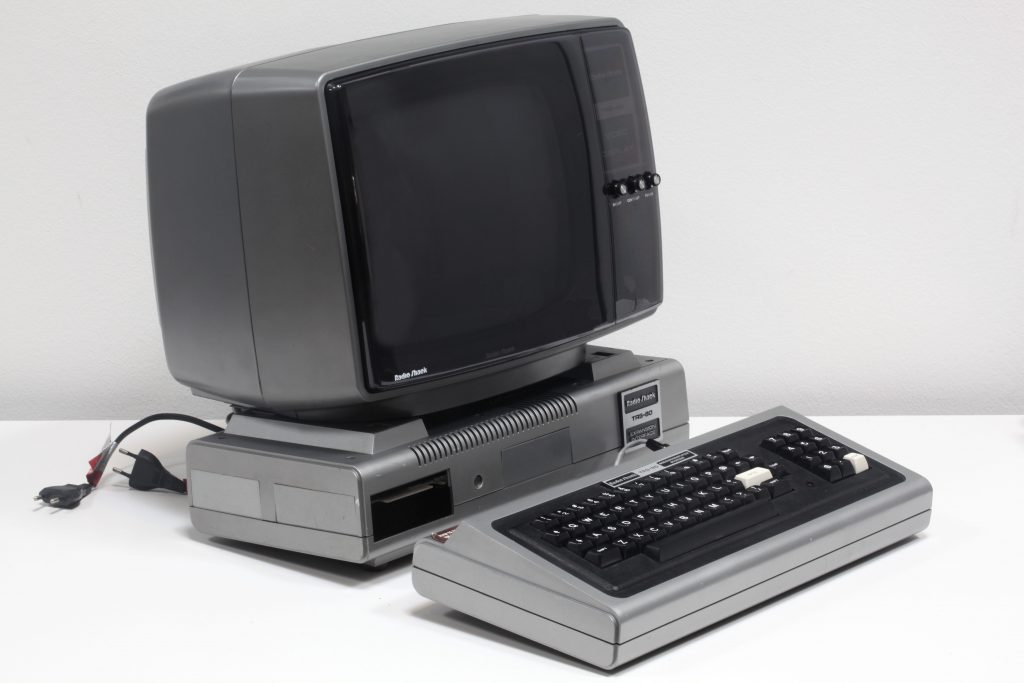
My relationship with technology started long before websites and social media dashboards. It began with machines like the TRS-80 from Radio Shack, where learning meant understanding logic, not clicking icons. You did not ask a computer to do something. You told it via a flashing cursor, exactly what to do and hoped you typed it correctly. That early experience wired my brain in a way that still shapes how I approach technology today.
By the mid 1980s, I was working with early CAD systems as my college area of study was drafting technology for mechanical and architectural design. AutoCAD in its early forms was not visual in the way people think of design software today. You entered X and Y coordinates manually. Later, Z coordinates entered the picture for 3D design. Precision mattered especially when I took a class in CNC to design 3D parts. Thinking ahead mattered. Mistakes were slow and costly.
Those years taught me that good work starts with understanding structure, not just appearance.
– Frank Deardurff III
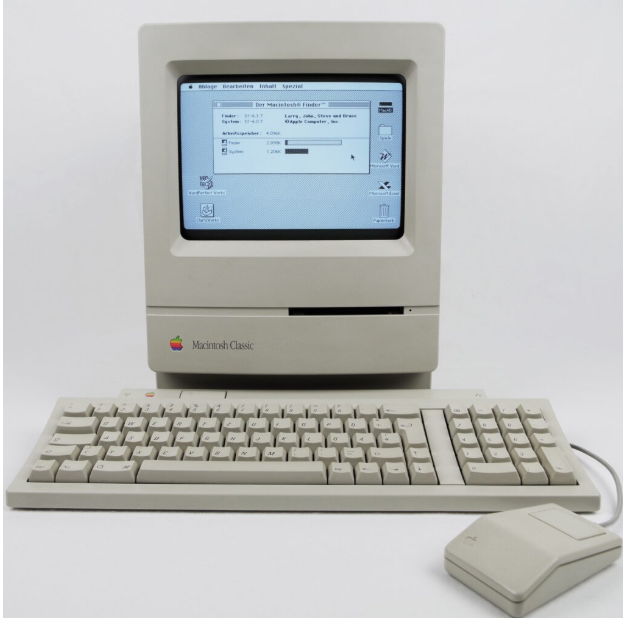
In the early 1990s, I moved into digital illustration on machines like the Macintosh Classic. The screen was small and black and white. Early versions of Adobe Illustrator and Photoshop were powerful for their time but demanded patience. You worked without live previews. You trusted the math. You saved often and swapped floppy disks like currency. Creativity was there, but it was earned.
Around the same time, networking and early internet tools were becoming part of my world. This was before the web felt friendly. Gopher menus, text-based systems, and college bulletin board services (BBS). Slow connections were the norm. When graphical browsers like Netscape Navigator appeared, it felt revolutionary. I was hand-coding HTML, learning by viewing source code, and building pages when most people were still trying to figure out what the internet was for. Some of those tools are still useful today. That hand coded SEO strategies and tips from that area are still being used even to this day. It was in this period that I started learning networking as I had to support and update an old grapevine network into Microsoft standard networking.
In the early 90’s I took a job working for an industrial training company that opened up a whole new world for me in Desktop Publishing, (DTP) where I blended my technical illustration abilities into the realm of page layout and design. Some of the early manuals were actually cut and pasted using x-acto knives and scotch tape as we digitized and reillustrated all of the manuals.

In the mid to late 1990s, I started blending design, technology, and commerce. Tools like Bryce 3D opened the door to creative experimentation in three dimensions. Rendering an image was not instant. You would set it up, hit render, and walk away. Sometimes you hoped the computer would still be running in the morning. Those moments taught patience and respect for the process.
This was also the era when I began experimenting with selling online. One of the biggest milestones for me was launching a store on Zazzle. That became my first real e-commerce experience. It was not just about selling t-shirts. It was about understanding fulfillment, audience, and marketing before those words were buzzwords. One of my earliest opt-ins was a t-shirt of the month contest. It sounds simple now, but at the time it was eye-opening. People raised their hands. They wanted updates. They wanted to be part of something.
In 2002, I went from side jobs building websites, and graphics into a full time business for myself. That year matters to me because it was the point of no return. No side hustle label. No fallback plan. Just decades of accumulated skills and a belief that the web was not going away. That decision shaped everything that followed.You can bet I was terrified as my wife and I still had teenage daughters at home to care for.
Since then, the tools have continued to change. Software became faster. Platforms became easier. The web became louder. Through it all, the fundamentals stayed the same. Learn the system. Respect the craft. Do the work when it is not glamorous.
When people reference Malcolm Gladwell and the idea of mastery through hours, I understand the spirit of it. Those hours were not clocked in one straight line. They were spread across drafting boards, early versions of Adobe software, hand-coded websites, print on demand experiments, e-commerce stores, plugins, AI, platforms, and publishing. Each era built on the last. With rough calculations with the AI technology from today, my hours of “mastery” would be closer to 70,000 hours. I guess that’s more than a few times around the block.
What I hope resonates with people who read this is not the length of the journey, but the continuity of it. If you remember floppy disks, overnight renders, table-based layouts, or your first online sale, we probably share more in common than you think. The tools may be different now, but the curiosity that drives good work has not changed.
This walk down memory lane is not about looking backward. It is about recognizing the foundation that makes it easier to navigate whatever comes next. And after all these years, that part still feels familiar.

My first computer was a Northstar with a Soroc IQ 120 terminal.
It worked with two floppy discs.
Probably 1977.