
Stop Guessing What Content to Create: Let Google Tell You
One of the biggest problems business owners have with content marketing is simple:
They run out of ideas.
After a while, every blog topic starts sounding the same. Every social media post feels forced. Business owners sit there staring at the screen wondering what they should write next, what Google wants, or why their competitors seem to rank higher while posting similar content.
Here’s the truth most people miss.
Google has already been telling you exactly what content people want.
Most website owners just ignore it.
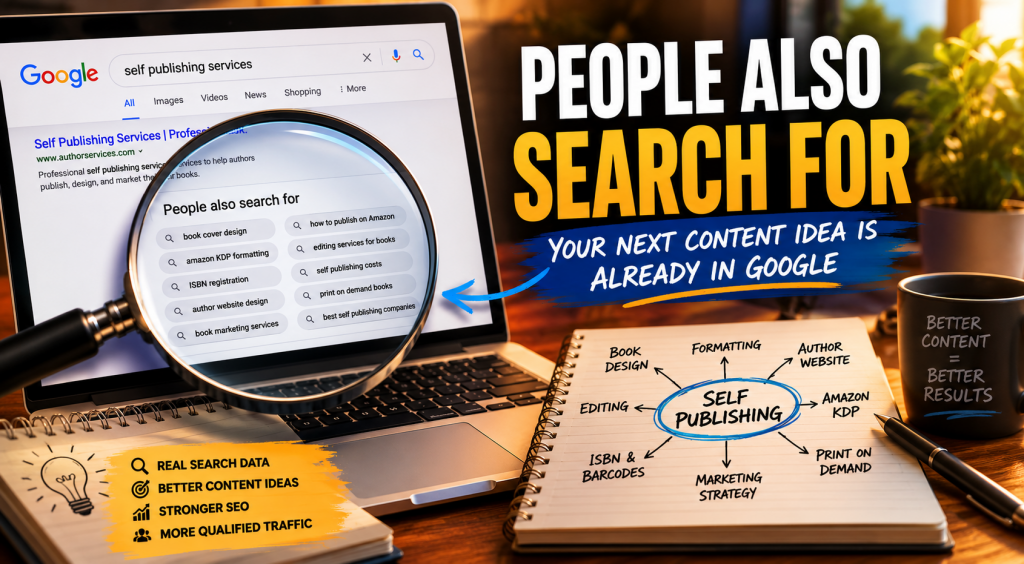
One of the easiest ways to find valuable content ideas is by paying attention to the “People Also Search For” section inside Google search results. It’s one of the most overlooked SEO and marketing tools available, yet it gives direct insight into what your audience is actively thinking about right now.
And the best part?
The research is already done for you.
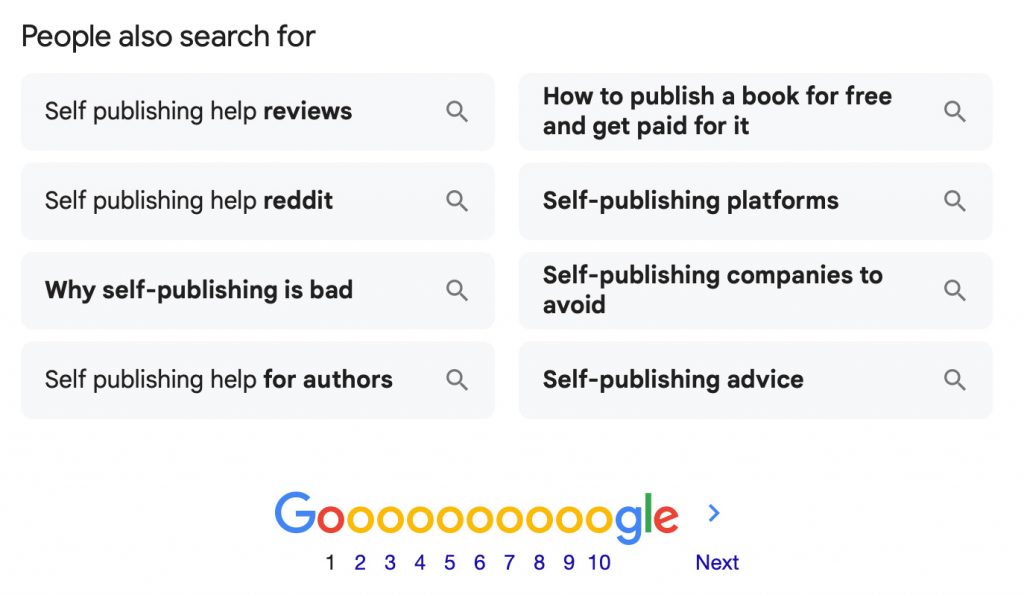
When somebody searches for a topic in Google, the search engine starts connecting related interests and follow-up questions based on real user behavior. That’s what “People Also Search For” represents. Google is essentially showing you the next layer of curiosity surrounding a topic.
For example, let’s say you own a self publishing service company (which I do) and search for “self publishing help.” Google may start suggesting related searches involving Amazon KDP formatting, ISBN registration, author websites, editing services, children’s book illustration, or book marketing ideas.
That information is incredibly valuable because it reveals what potential customers are actually struggling with during the publishing process. Instead of randomly creating blog posts and hoping they work, you suddenly have a roadmap of connected topics your audience already cares about.
This is where content marketing becomes much easier.
Instead of asking:
“What should I write about?”
You start asking:
“What questions are my visitors already asking Google?”
That shift changes everything.
Most websites stay too shallow. They create one generic service page targeting broad keywords and expect that to somehow build authority with Google. Modern SEO does not work that way anymore. Search engines want depth, context, and topical relevance. Google wants confidence that your website genuinely understands the subject matter surrounding your industry.
That means if you offer self publishing services, your website should probably include content about formatting, cover design, ISBNs, print-on-demand services, author branding, launch strategies, editing, and marketing. Those connected topics help build what SEO professionals call topical authority.
In simple terms, Google starts viewing your website as more trustworthy because your content covers the broader ecosystem surrounding the subject.
This is exactly why “People Also Search For” matters so much.
It helps you uncover the surrounding conversations happening around your primary services.
Even better, many of those related searches are easier to rank for than highly competitive keywords. Everybody wants to rank for broad phrases like “self publishing services” or “website design.” Far fewer businesses are creating high-quality content around detailed searches like “how much does it cost to self publish a children’s book” or “best trim size for paperback printing.”
Those smaller searches are often where highly motivated visitors exist.
And highly motivated visitors convert.
That’s an important distinction because traffic alone does not grow a business. Relevant traffic does. A thousand random visitors who bounce off your site are far less valuable than fifty visitors actively searching for the exact solution you provide.
This strategy also helps eliminate one of the biggest content marketing mistakes businesses make: creating disconnected content with no overall direction.
Smart websites build connected content ecosystems.
For example, one blog article about ISBN registration can naturally link to:
- your formatting services
- your cover design services
- your Amazon KDP setup guide
- your author website services
- your publishing consultation page
Now your content starts supporting itself.
Google sees relationships between topics.
Visitors stay on your site longer.
Your authority grows over time.
And perhaps most importantly, creating content becomes easier because you’re no longer inventing topics out of thin air.
You’re following real audience behavior.
One of the hidden advantages of this strategy is that it also improves your sales messaging. The searches people make often reveal fears, confusion, objections, or frustrations that potential customers experience before buying. If people repeatedly search phrases about self publishing costs, formatting problems, or ISBN confusion, those concerns should probably be addressed directly on your website.
That means your blog content improves your sales pages.
Your FAQs improve.
Your lead magnets improve.
Your videos improve.
Your email marketing improves.
Because now your marketing is based on actual customer curiosity instead of assumptions.
I’ve said for years that one of the biggest mistakes website owners make is treating SEO like a technical game instead of a communication strategy. At its core, good SEO is really about understanding people. The better you understand what your audience wants, fears, needs, and searches for, the easier it becomes to create content that connects.
That’s why “People Also Search For” is so valuable.
It gives you insight into how your audience thinks.
And in today’s online world, that kind of insight is marketing gold.
